Why Diabetes Nurse Educators matter more than ever in South Africa
If you are living with diabetes in South Africa - you would be considered lucky if you spend approximately 2 hours with your diabetes specialist or endocrinologist per year. That leaves 8,758 hours left of the year, where you are responsible for every diabetes related decision.
The balancing act of diabetes
From deciding which foods to eat to avoid glucose spikes, to taking the correct amount of insulin, avoiding low glucose events, ensuring you have enough medication on-hand and multiple healthcare visits per year, to name a few…diabetes management is a series of daily, often invisible calculations happening in the background of everyday life.
On top of that many people living with diabetes are having to deal with stigma, mental health issues and the ongoing pressure of preventing long-term complications. It’s a relentless balancing act that exists alongside school or work, family responsibilities, and the normal demands of life.
People with diabetes feel unsupported
Through the SA Diabetes Advocacy Course, we have heard time and time again from caregivers, people living with diabetes, and healthcare professionals across both the private and public sectors, that people living with diabetes feel unsupported in managing their condition.
For some, diagnosis comes with barely any education, leaving them confused and unsure of what to do next. For others, it’s the opposite, too much information that leaves them feeling lost on where to begin when it comes to diabetes management. The main frustration shared between the advocates is that the diabetes information they have received feels very generic.
Diabetes doesn’t look the same for everyone
The advice of “eating a well balanced plate of food” can mean something very different in the context of South Africa when it comes to the vast cultural, religious and economic backgrounds that we share. The recommended advice of “150 minutes of exercise per week” looks very different when some people have access to a safe place to exercise, while others live in environments where taking a walk around the block simply isn’t safe.
What really stands out when we discuss our clinical and lived experience of diabetes education, is that so much of this information feels generic and doesn’t reflect people’s real lives, their routines, their challenges. People living with diabetes feel like they are left trying to figure it all out on their own.
So how do we bridge that gap? How do we take clinical advice on managing diabetes and turn it into something that actually supports people in living with it every day?
Making diabetes management work in the real world
Diabetes Nurse Educators play a vital role in the diabetes management eco-system.
Diabetes Nurse Educators don’t just deliver information. They take clinical advice and help shape it into something that can work in the context of a person’s real life with their own routine, resources and challenges.
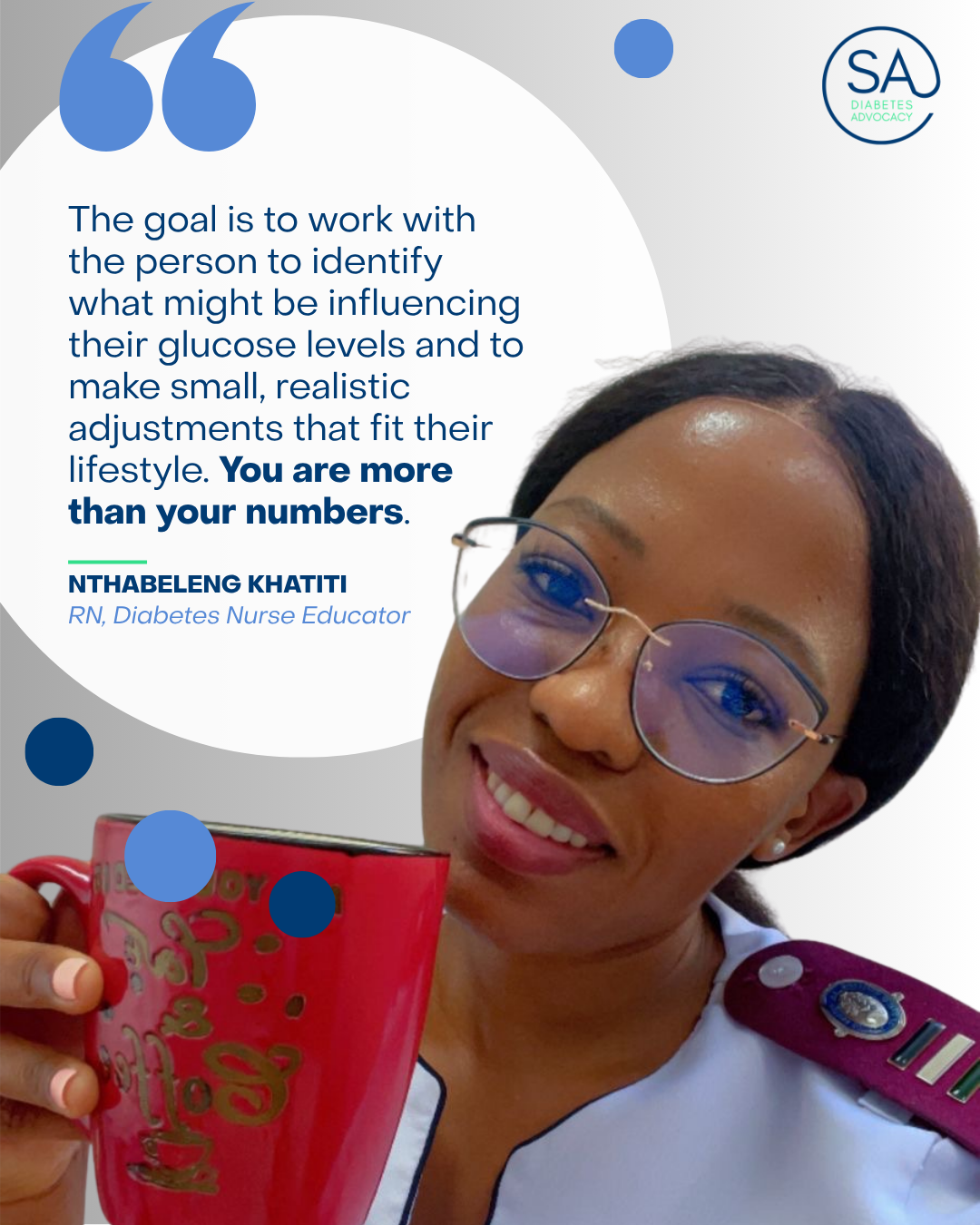
“The goal is to work with the person to identify what might be influencing their glucose levels and to make small, realistic adjustments that fit their lifestyle. You are more than your numbers” - Nthabeleng Khatiti, Diabetes Nurse Educator
They help people with diabetes make sense of their glucose levels by spotting trends in their blood glucose meter readings or their Continuous Glucose Monitor (CGM) data, they help adjust their treatment plan safely, and build confidence in the many decisions they face every day.
Diabetes Nurse Educators provide ongoing support by checking in, problem-solving, and adapting care as life changes. Diabetes Nurse Educators also play a vital role in supporting people with diabetes in understanding and adapting the tools they use to manage their condition, whether that’s translating CGM data or navigating insulin pump therapy.
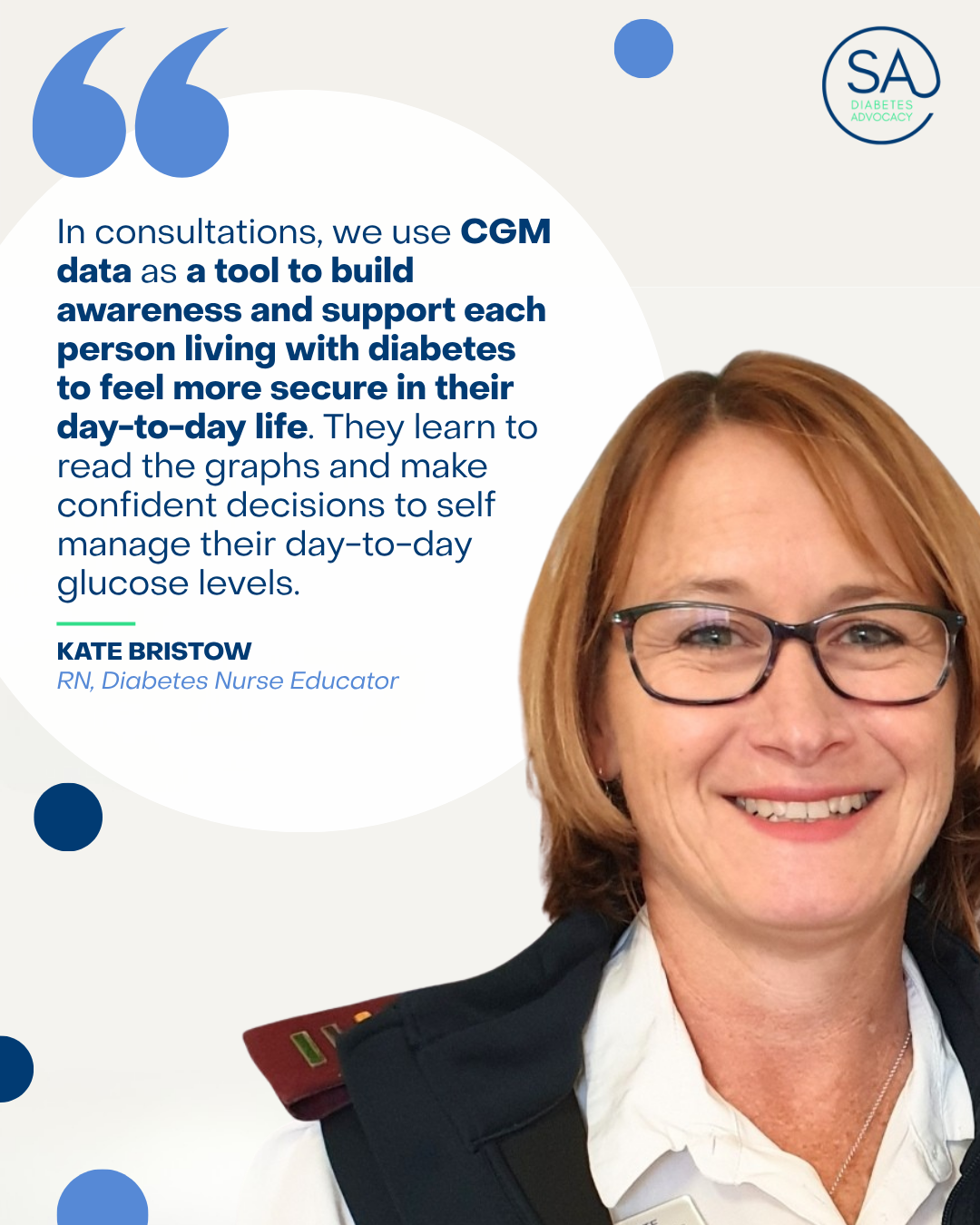
Diabetes Nurse Educator, Kate Bristow shares “In consultations, we use CGM data as a tool to build awareness and support each person living with diabetes to feel more secure in their day-to-day life. They learn to read the graphs and make confident decisions to self manage their day-to-day glucose levels.”
Diabetes Nurse Educators can make people living with diabetes feel more supported by turning overwhelming information into practical, personalised guidance. Shifting diabetes care from simply managing the condition to actually living with it everyday.
This is why Diabetes Nurse Educators matter more than ever in South Africa…
In a country where time with specialists is limited and the realities of daily life in South Africa are anything but equal, Diabetes Nurse Educators are essential in making people living with diabetes feel more supported.
If we are serious about improving diabetes care in South Africa, we cannot afford to overlook the role of DNE’s, who walk alongside people with diabetes as they make management decisions for the other 8,758 hours of the year.